Whenever I tell people I’m from Romania, the first word I usually hear is “Dracula”. I always smile, because I understand why. But every time, I also feel a small wish to show them the country I know: the Romania of my childhood, of wooden churches and painted monasteries, of grandmothers who insist you eat a second plate, of mountains that still belong to the bears. In Romanian, we have a word that has no real translation: dor. It’s a deep longing for a place or a person you love. This journey was born from that feeling. It is my Romania, beyond Dracula.
I like to start in Bucharest, the city that surprises almost everyone. Once called “Little Paris”, it still carries that elegance in its grand boulevards, its Belle Époque buildings and the beautiful Romanian Athenaeum, where I could listen to a concert beneath its painted dome for hours. Just a few streets away stands the enormous Palace of the Parliament, one of the largest buildings in the world, a powerful reminder of a more difficult chapter in our history. In the evening, the cobbled streets of the Old Town come alive with music, terraces and the smell of grilled mici, our little sausages that every Romanian will passionately tell you are the best in the world.
Leaving the capital, the road climbs into the Prahova Valley, and the Carpathian Mountains rise around you. In Sinaia, hidden among the pine forests, stands Peleș Castle. Every time I visit, it takes my breath away again. With its towers, carved wood and richly decorated rooms, it looks like it stepped straight out of a fairy tale. For me, it is far more magical than any vampire legend.
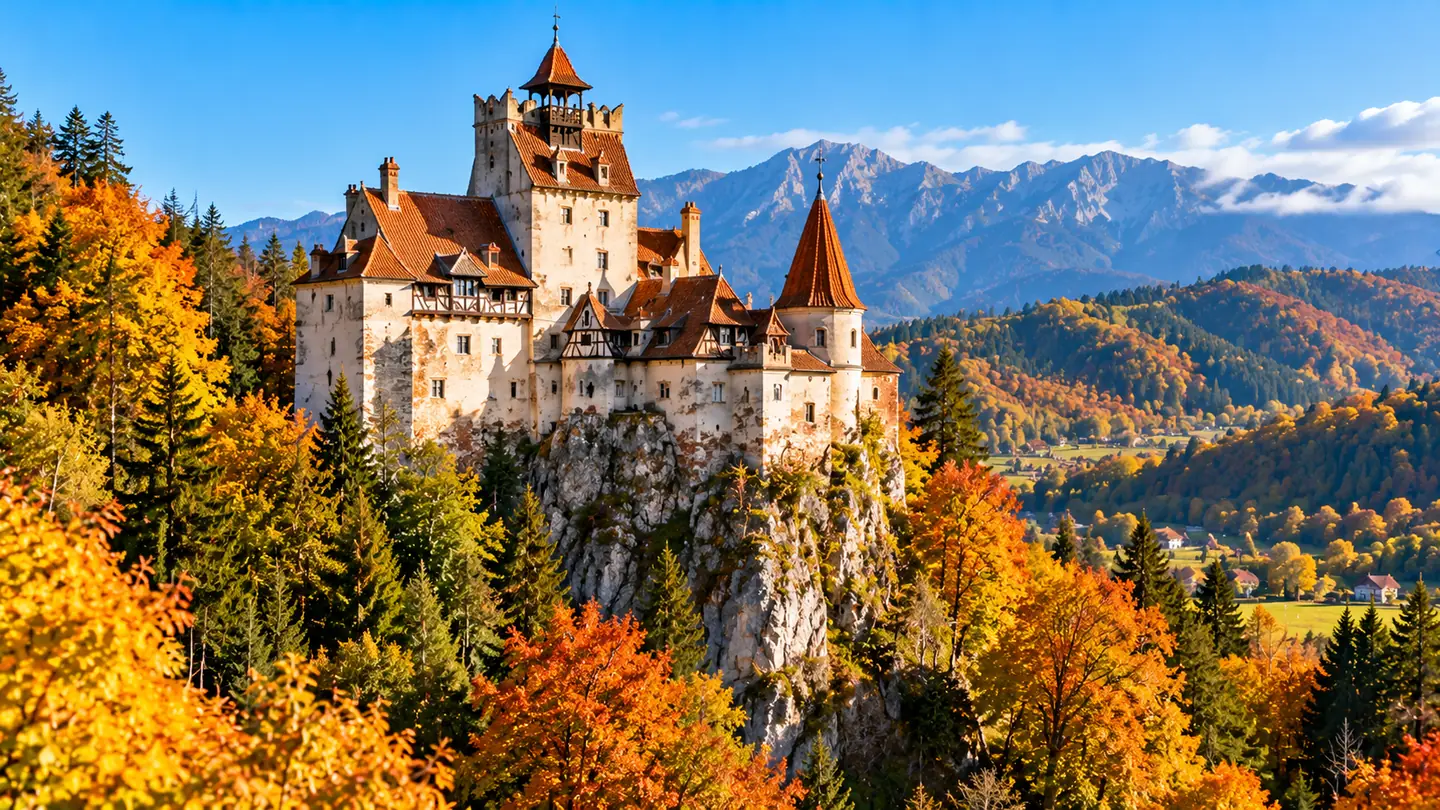
Of course, I do take my travellers to Bran Castle, perched on its rock above the valley. It’s part of our story, and it’s fun to walk through its narrow corridors and hear how the legend of Dracula came to be. But I always tell them: the real story of this region is told just a little further on.
Brașov is one of my favourite cities in Romania. Its medieval centre lies at the foot of Mount Tâmpa, with colourful houses around the Council Square and the impressive Black Church, named after its walls were blackened in a great fire. I love walking through Strada Sforii, one of the narrowest streets in Europe, and then taking the cable car up the mountain for a view over the red rooftops. In the forests around Brașov, live brown bears, and watching them in the wild from a quiet hide at dusk is an experience that stays with you forever.
From Brașov, the road leads into the heart of Transylvania, to the land of the Saxon villages. Here, time seems to have slowed down. In Viscri, horse-drawn carts still travel the dusty road, cows walk home on their own in the evening, and a fortified church watches over the village as it has for centuries. Staying in a traditional guesthouse here, eating fresh bread, homemade cheese and jam made from fruit picked that morning, I always feel deeply connected to the Romania of my grandparents.
Just a short drive away lies Sighișoara, one of the best-preserved medieval citadels in Europe. Climbing the covered wooden stairway to the church on the hill, walking past colourful houses and the tall clock tower, I feel like I’m walking through a living history book. Then comes Sibiu, elegant and cultural, with its large squares and the famous houses whose small rooftop windows look like watchful eyes. In winter, its Christmas market fills the main square with lights and the scent of mulled wine, one of the most beautiful sights in the country.
From Sibiu, if you travel in summer or early autumn, you can drive the Transfăgărășan, the most spectacular road in Romania. It winds its way up through the Făgăraș Mountains in endless curves, past waterfalls and steep valleys, to the glacial lake of Bâlea at the top. Every time I drive it, I stop more often than I plan to, simply because the views ask for it.
Then the journey heads north, to the regions closest to my heart. Maramureș is Romania at its most authentic. Its tall wooden churches, some of them UNESCO-listed, reach towards the sky with their slender spires, and the villages are full of beautifully carved wooden gates. People still wear traditional clothing to church on Sundays, and hospitality here is not a service, it’s a way of life. In Săpânța, the Merry Cemetery tells the stories of the villagers on brightly painted wooden crosses, with humour and honesty. It’s a perfect example of how we Romanians look at life: with warmth, even in the face of sorrow.
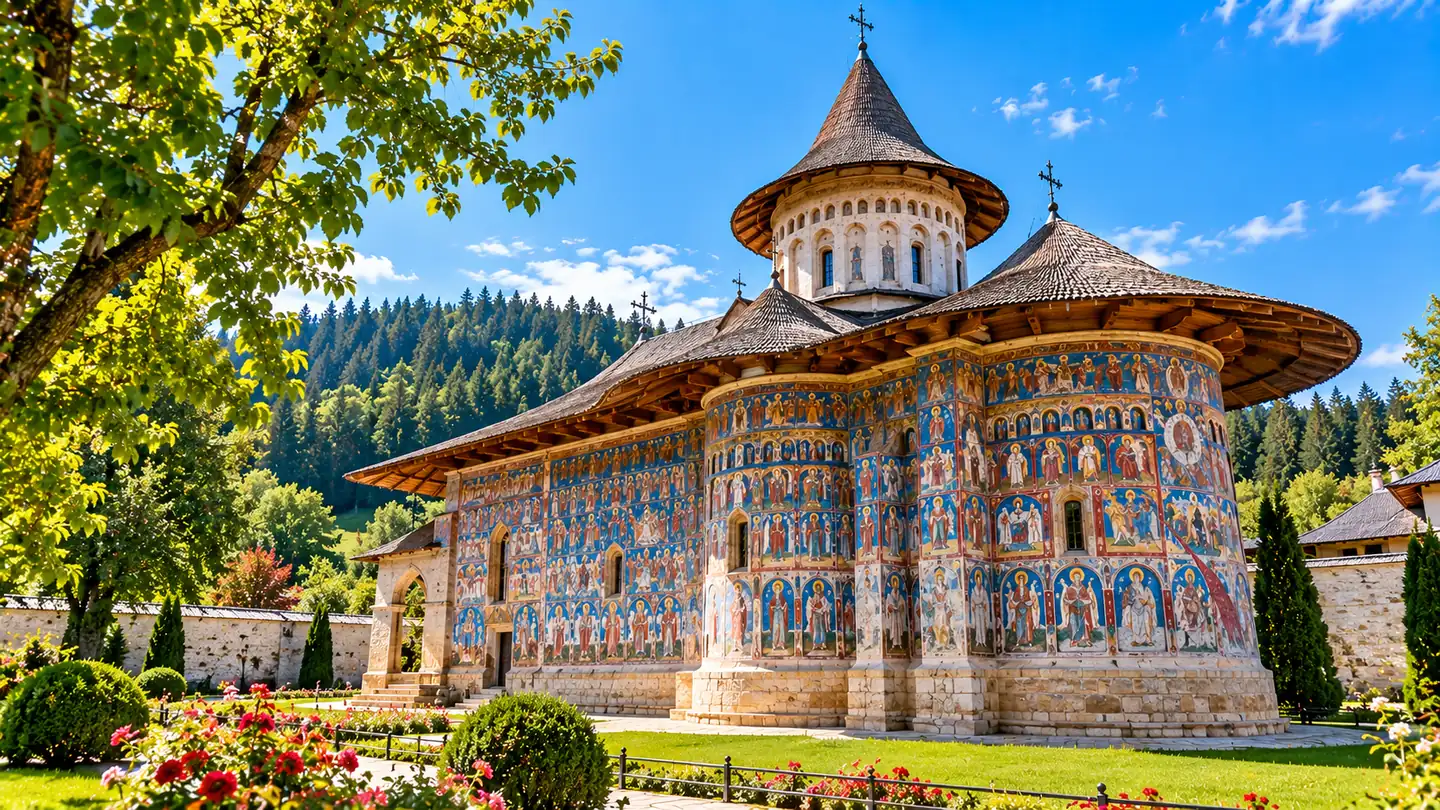
Across the mountains lies Bucovina, home to the famous painted monasteries. Their outer walls are covered with centuries-old frescoes in deep blues, greens and reds, telling biblical stories to people who, long ago, could not read. Standing in front of Voroneț, with its unique shade of blue known around the world, I always feel a quiet sense of pride. This is the heritage I wish more people knew about.
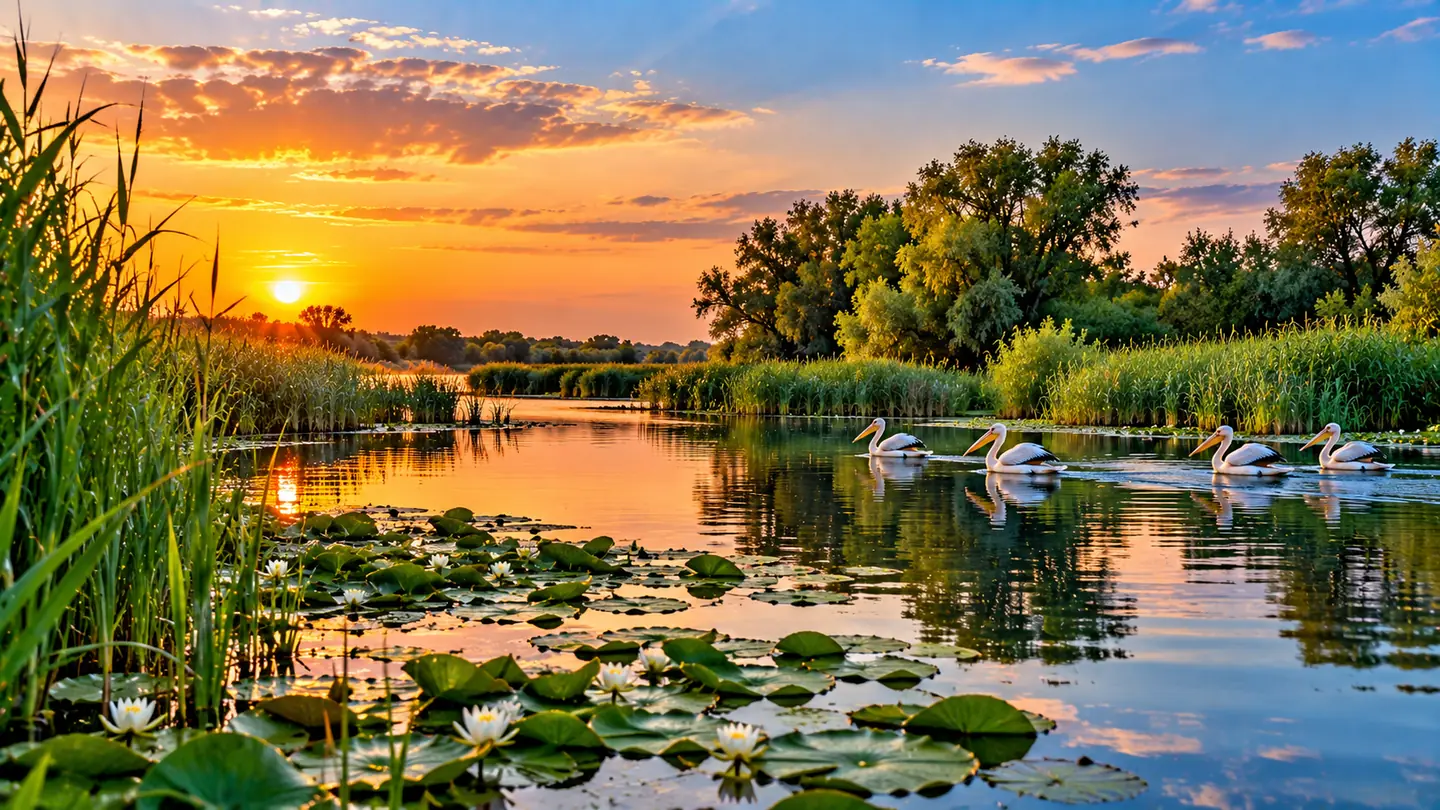
For those with a bit more time, I love ending the journey in the Danube Delta, where the great river meets the Black Sea. Gliding through the channels in a small boat at sunrise, between the reeds and water lilies, with pelicans lifting into the sky, is pure peace. It’s one of the largest wetlands in Europe, and one of the most beautiful places I know.
Romania is a country of contrasts: elegant cities and simple villages, wild mountains and gentle hills, a complicated history and an enormous warmth. Above all, it is a country of people who will welcome you as if you were family. That is what I want every traveller to experience.
For a route like this, I recommend around two weeks, or a little longer if you’d like to include the Danube Delta. The most beautiful times to travel are late spring and early autumn, when the landscapes are green or golden and the weather is perfect for exploring. And the best part? Romania is just a short flight from the Netherlands.
Bine ați venit în România. Welcome to my Romania.